
Top Wire Rope Hoist Benefits for Warehouses and Factories in 2026
Material handling is a crucial element in maintaining productivity at warehouses and manufacturing facilities....
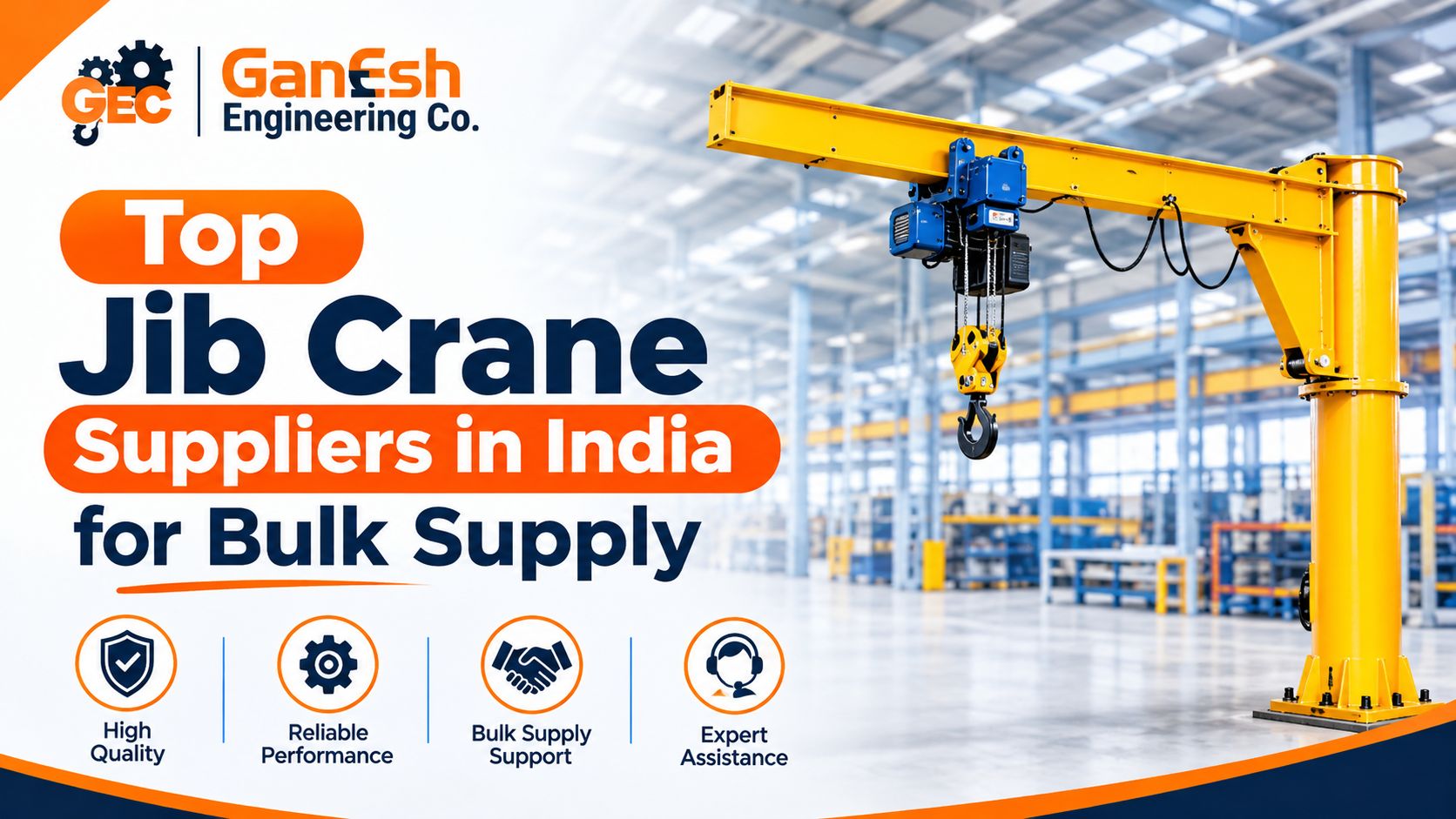
In industrial lifting operations, the need for reliable cranes that can effectively manage heavy loads, enhance efficiency, and facilitate safe material handling is paramount. Jib cranes are commonly used in a range of industrial applications, such as manufacturing plants, warehouses, workshops, and fabrication facilities, to lift and move loads within a defined working area. Jib Crane Manufacturers in Ahmedabad meet the industrial needs by offering crane systems of various load capacities, working conditions, and material handling applications.
Ganesh Engineering Co. is the featured brand in this article, which highlights the important features, benefits, applications, and selection factors associated with jib cranes. By knowing the crane's capacity, lifting height, boom length, installation needs, and operational characteristics, businesses can make informed decisions when purchasing a crane. This article will also cover aspects of bulk procurement and associated heavy duty lifting equipment for industrial facilities.
A jib crane is a material handling system which comprises of a horizontal boom or jib that is supported by a vertical column or mounted on an existing structure. It is usually fitted with a hoist and trolley to aid in the lifting and movement of materials within a specific operating radius. Jib cranes can be fixed or rotating, depending on the design, allowing for easy handling of materials.
These cranes can be helpful in industrial settings where frequent lifting is required at workstations or production areas. When looking for the best Jib Crane Supplier in Gujarat, it is essential to consider factors such as crane design, load capacity, rotation angle, mounting arrangement, and operating conditions. Choosing the appropriate setup can enhance material transport and enable structured industrial processes.
There are various types of jib cranes to suit the lifting needs of manufacturing units, workshops and warehouses. Their design and specifications vary depending on the application, capacity and space to be installed.
Important features include:
In industries, jib cranes can be used to handle routine lifting operations more efficiently and facilitate organized material handling. Their small footprint is ideal for individual workstations and production spaces where a larger overhead crane system may not be feasible. They can also aid in repetitive lifting tasks and enhance access to materials.
These benefits render jib cranes a valuable option for various industrial settings. But, their performance relies on the correct crane selection, structural support, installation quality, load limits, and maintenance. To ensure reliable crane operation, businesses should adhere to the manufacturer's operating instructions and applicable safety requirements.
When choosing a jib crane, it is crucial to consider the lifting requirements and the space available for installation. The buyer should determine the maximum load weight, the height the load needs to be lifted to, the length of the boom, the angle of rotation, the frequency of operation and the type of material to be handled. These details can be used to decide on the suitable crane configuration for a specific industrial application.
Product specifications, structural quality, hoists, fabrication standards, installation support, and maintenance facilities are the factors that the businesses should check when comparing a Jib Crane Supplier in Gujarat. Production capacity, delivery time, customization, and after-sales support are also crucial factors for bulk orders. Evaluation is important for businesses to ensure that they select equipment that aligns with their operations and procurement needs.
Jib cranes are typically found in manufacturing plants, engineering workshops, fabrication units, warehouses and assembly facilities. They assist in moving and positioning heavy parts within individual workstations, machines and production areas. They are also useful for moving materials between work processes that are in close proximity to one another, rather than having to move larger crane systems.
These cranes are also found in maintenance departments, loading areas and industrial repair facilities where frequent lifting tasks are performed. They can be used for various materials and components, depending on the design and capacity of the crane. Safe and effective use requires proper load assessment and planning for installation.
The development of industrial crane technology is increasingly emphasizing operational safety, lifting accuracy, durability of equipment, and ease of use. When choosing material handling equipment, businesses are now looking at modern hoisting mechanisms, better braking systems and appropriate control options. These advancements enable industries to handle lifting operations as per their production needs.
Another key factor is the tailoring of crane designs to meet the specific requirements of industrial facilities. Buyers are looking for flexibility of installation, ease of maintenance, energy-efficient equipment and low operating costs. By choosing cranes that have the right specifications and reliable technical support, businesses can better plan their material handling operations.
Goliath cranes are also employed in industries where a large working area is required in addition to heavy duty material handling, as well as jib cranes. These cranes are typically ground level, and they are used to lift and transport heavy loads within a specific industrial area. These are frequently used in large component applications, fabrication, storage yards, and infrastructure related applications.
For companies seeking to acquire robust lifting machinery for industrial tasks and large-scale material handling needs, a Goliath Crane Exporter from India might be applicable. The buyer should consider the lifting capacity, span, lifting height, structural design, hoisting arrangement, safety features and installation requirements. Selecting the right crane setup can ensure that the crane is suitable for the site's requirements.
When it comes to choosing the right Jib Crane Manufacturers in Ahmedabad, businesses need to consider reliable lifting solutions for their manufacturing plants, warehouses, workshops, and industrial facilities. Before buying, it is important to consider load capacity, boom length, lifting height, rotation, structural strength and installation requirements. By selecting the right crane equipment, businesses can enhance their material handling processes, facilitate efficient workflows, and ensure compliance with specific industrial lifting demands.
In this article, the spotlight is on Ganesh Engineering Co., where we explore key aspects of jib cranes and industrial material handling equipment. When businesses are considering bulk orders, they should ensure that they compare the technical specifications, customization options, fabrication quality, delivery schedules, and after-sales support before making a final decision. By choosing the right equipment, ensuring proper installation, and maintaining it regularly, you can help ensure reliable lifting operations and a long lifespan for your industrial equipment.
1. What is a jib crane used for?
A jib crane is a machine that is used to lift, lower and move materials within a particular work area in factories, workshops, warehouses and manufacturing units.
2. What are the common types of jib cranes?
Typical types are floor mounted, wall mounted and other application specific jib crane designs.
3. What factors should buyers consider before purchasing a jib crane?
The specifications to be checked by the buyer include load capacity, boom length, lifting height, rotation angle, installation space, hoist specifications, and safety requirements.
4. Which industries commonly use jib cranes?
Jib cranes are typically used in manufacturing, fabrication, engineering, warehousing, assembly, and maintenance industries for material handling.
5. What is the difference between a jib crane and a Goliath crane?
A jib crane is typically used to move materials within a specific radius, whereas a Goliath crane is mounted on ground level tracks and has a wider working area.
Material handling is a crucial element in maintaining productivity at warehouses and manufacturing facilities....

A transparent pricing guide explaining how crane manufacturers calculate EOT crane costs in India based on steel weight,...
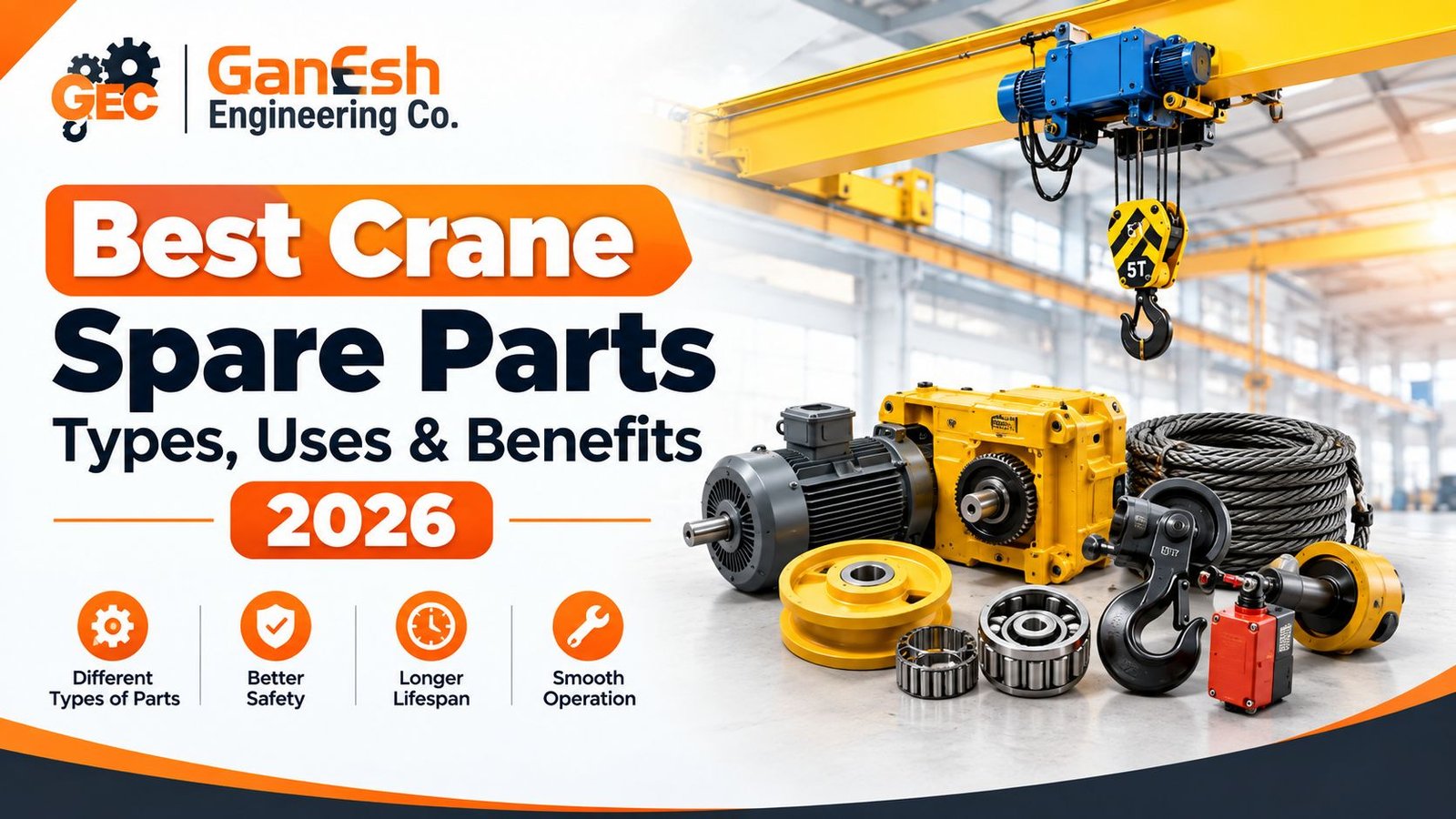
A practical maintenance guide and replacement parts checklist for plant managers to maintain EOT cranes, gantry cranes, ...
Send us your capacity, span and lift height. Our engineers reply with a design and quotation.
Share your requirement. We usually reply the same working day.