

Electric Wire Rope Hoist vs Chain Hoist: Technical Comparison & Selection
Understand the mechanical differences between electric wire rope hoists and chain hoists to select the correct unit for ...
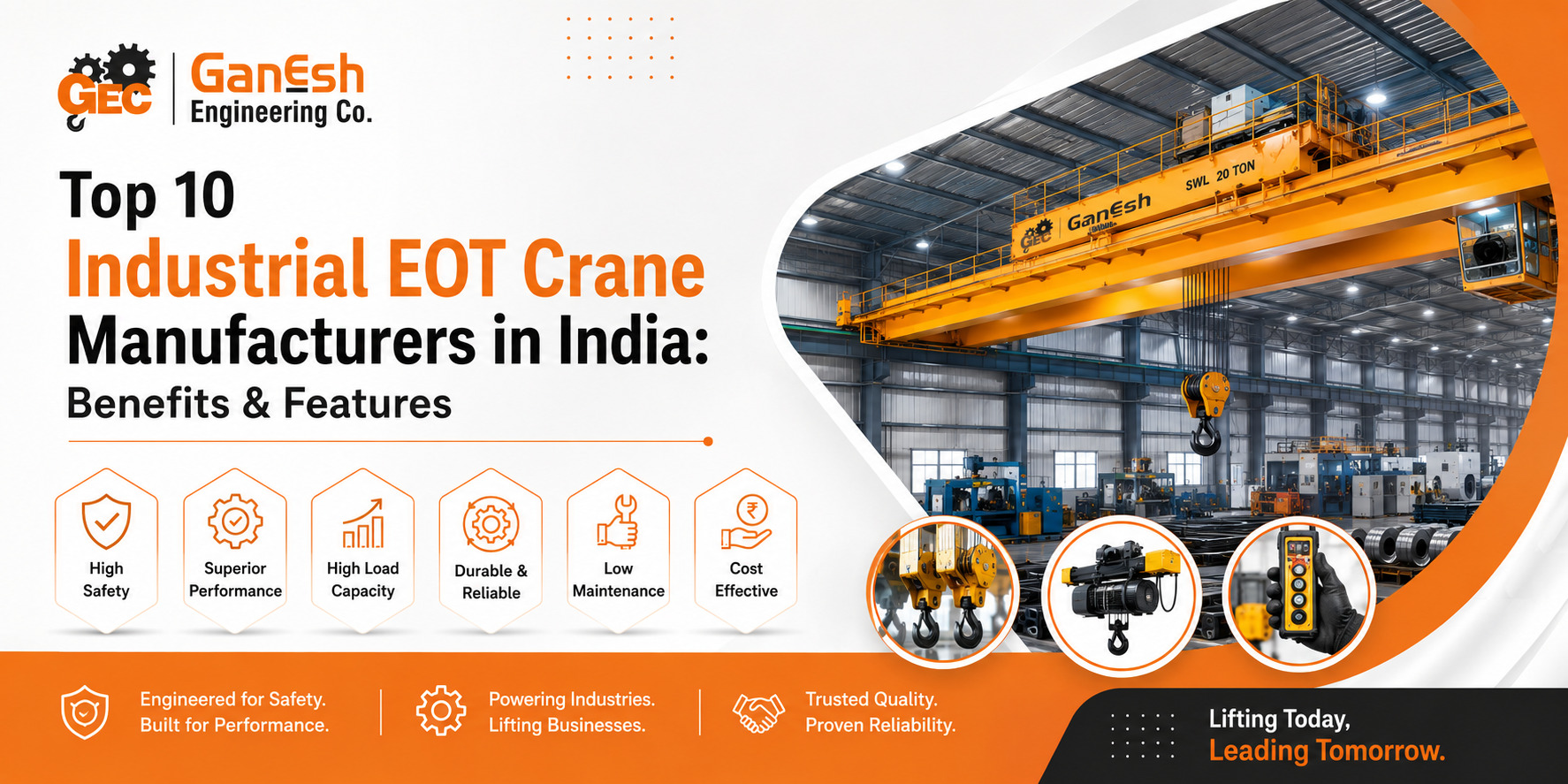
When specifying an electric overhead travelling crane, capacity (tonnage) and span (meters) are only half the equation. The most critical factor determining whether your crane will operate reliably for 25 years or experience premature gear, motor, and wheel failure is the Duty Classification.
In India, overhead crane duty is governed by IS 3177:1999 (incorporating ISO 4301 and FEM 9.511 standards). Duty class defines the combination of daily operating hours, average load intensity (load spectrum), and total lifting cycles.
| Duty Class | Mechanism Group (IS / ISO) | Operating Hours/Day | Load Spectrum | Typical Industrial Use |
|---|---|---|---|---|
| Class I | M3 / M4 (FEM 1Bm / 1Am) | 1 to 2 Hours | Light (rarely lifting maximum SWL) | Pump rooms, standby maintenance bays, turbine halls, irrigation stations |
| Class II | M5 (FEM 2m) | 2 to 4 Hours | Medium (regularly lifting 50% to 70% SWL) | General engineering workshops, assembly lines, light fabrication, warehouses |
| Class III | M7 (FEM 3m) | 4 to 8 Hours | Heavy (frequently lifting near maximum SWL) | Heavy structural fabrication, machine tool plants, foundries, steel stockyards |
| Class IV | M8 (FEM 4m) | 8 to 24 Hours (Continuous) | Severe (continuous maximum load lifting in harsh environments) | Steel melting shops, continuous casting, hot ladle handling, continuous rolling mills |
Attempting to save capital cost by ordering a Class II crane for a Class IV steel processing facility causes severe equipment failure:
At Ganesh Engineering Co., our design team calculates your exact duty group before engineering your EOT crane or wire rope hoist. Speak to our engineering consultants today.
Understand the mechanical differences between electric wire rope hoists and chain hoists to select the correct unit for ...
A comprehensive review of India's leading gantry and goliath crane manufacturers, examining cantilever designs, wind loa...

An essential guide to Gujarat's leading EOT crane manufacturers, reviewing manufacturing hubs across Ahmedabad, Vadodara...
Send us your capacity, span and lift height. Our engineers reply with a design and quotation.
Share your requirement. We usually reply the same working day.